Drilling casing plays an indispensable role in various drilling operations, including water well drilling, mineral exploration, foundation construction, and oil and gas extraction. It serves as the “skeleton” within the borehole, protecting the walls from collapse, isolating undesirable aquifers, and ensuring the safety of the extracted water quality.
What is Drilling Casing?
Drilling casing refers to the protective pipe installed inside a borehole after (or during) the drilling process. It is known by various names in the industry, such as borehole casing, well casing, bore casing pipe, and obсадная труба (a common term in Russian-speaking markets).
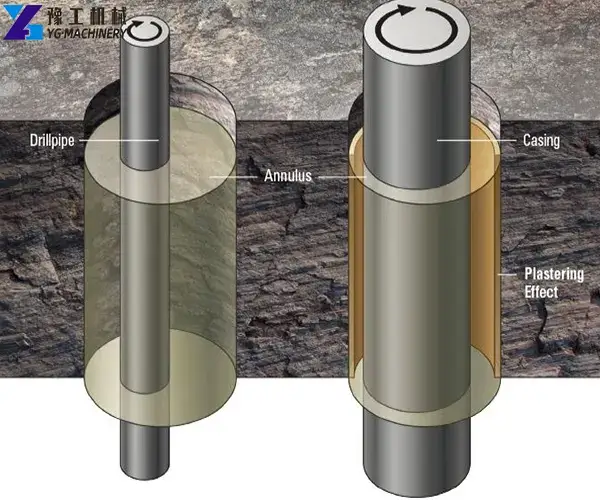
Core Functions of Casing
- Supporting borehole walls: Prevents collapse and borehole blockage caused by loose formations, running sand, or fractured rock.
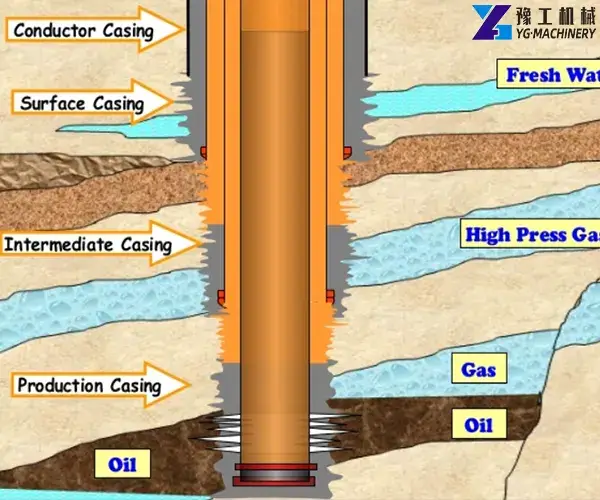
- Isolating water zones: Seals off shallow contaminated water or saline aquifers, protecting deep, high-quality water sources from contamination.
- Controlling fluid loss: In fractured or karst terrains, casing allows drilling to continue by bridging across zones of fluid loss.
- Protecting equipment: Provides a stable installation channel for submersible pumps, thereby extending equipment service life.
- Guiding the drilling process: In pile foundation projects, casing guides the drill bit and maintains borehole wall stability.
The global casing market reached approximately US$19.4 billion in 2025 and is projected to grow to US$33.1 billion by 2034, representing a compound annual growth rate (CAGR) of about 5.94%. Demand for drilling casing is steadily rising alongside the continued expansion of global water resource development, infrastructure construction, and energy exploration.
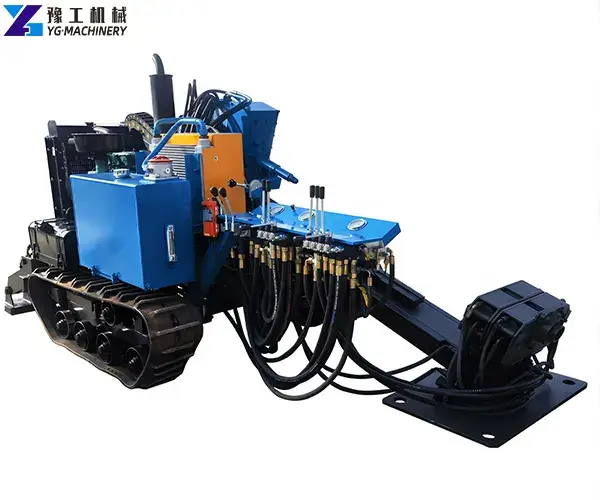
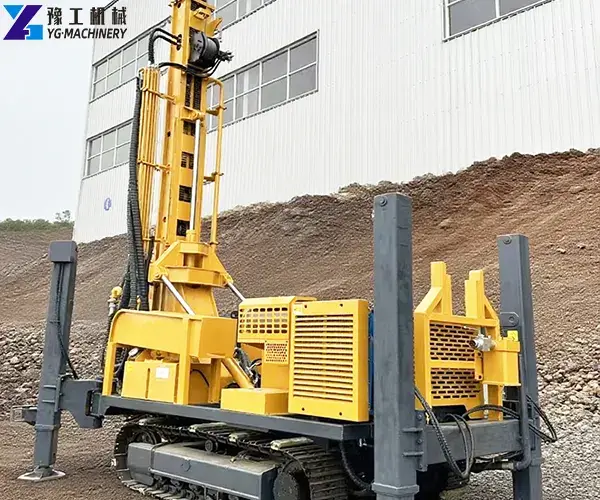
As a manufacturer with 20 years of experience in the drilling equipment sector, YG Machinery offers a comprehensive range of drilling equipment—including water well rigs, core drills, and pile drivers—as well as steel and PVC casings, providing customers with a one-stop procurement solution for everything from machinery to consumables.
Click Here to Learn More Details About the Drilling Rig
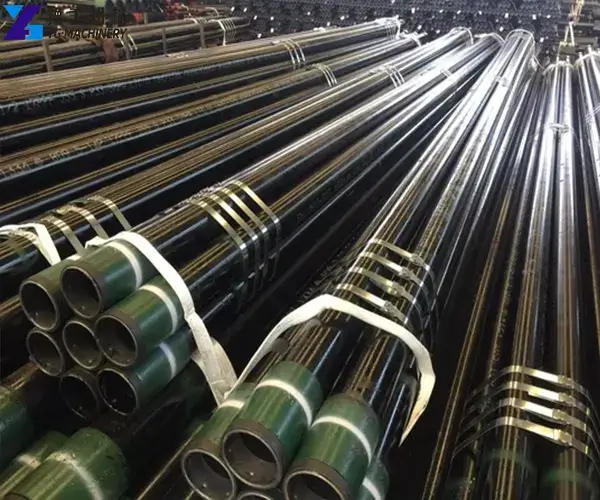
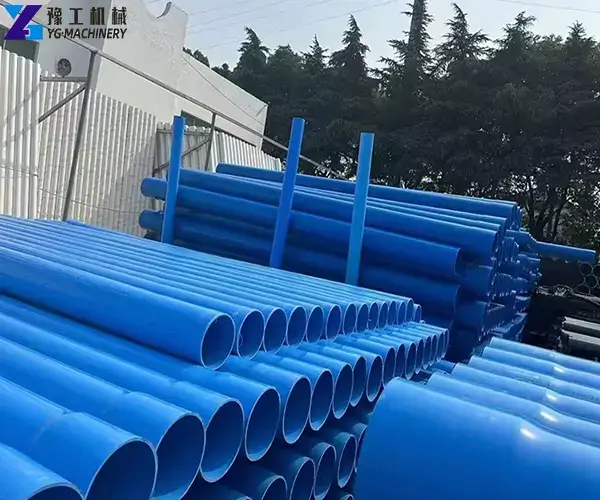
When Is Drilling Casing Required?
Scenarios requiring casing:
- Unconsolidated formations: When drilling through quicksand, gravel, or fill layers, the borehole wall is highly prone to collapse; casing must be installed concurrently with drilling.
- Shallow groundwater contamination: When shallow groundwater is contaminated by pesticides, industrial wastewater, or seawater intrusion, casing must be used to seal off and isolate the zone.
- Severe circulation loss zones: In karst terrain or highly fractured rock, massive drilling fluid loss prevents circulation; casing is required to bridge across the loss zone.
- Pumping equipment installation: Upon well completion, casing (solid pipe and screen sections) must be installed to form a permanent wellbore and protect the submersible pump.
Situational scenarios:
- Competent rock formations: The borehole wall is inherently stable, so casing may not be required during drilling; however, installing a casing section for the pump chamber is still recommended upon completion.
- Moderately stable formations: Drilling fluid can serve to stabilize the borehole wall, partially replacing the function of casing; however, installing a full casing string is still recommended for long-term operational wells.
Formation and casing requirement comparison table:
| Stratum Type | Drilling Challenges | Is a Casing Required? | Primary Functions of the Casing |
| Loose running sand/fill layer | High risk of borehole collapse and drill string burial | Mandatory | Supporting the borehole wall and establishing a drilling channel |
| Overburden (cobbles/gravel) | Difficulties in borehole wall stabilization and mud loss | Mandatory | Isolating unstable formations and preventing rockfalls |
| Shallow contaminated aquifer | Impact on deep-aquifer water quality | Mandatory | Sealing off sources of contamination and protecting the quality of the target water |
| Karst cavern zone | Severe fluid loss and stuck pipe | Recommended | Bridging void spaces and restoring circulation |
| Intact rock stratum | Borehole wall stability | Depends on the situation | Serving solely as a pump chamber casing after well completion |
Click Here to Learn More Details About the Drilling Rig
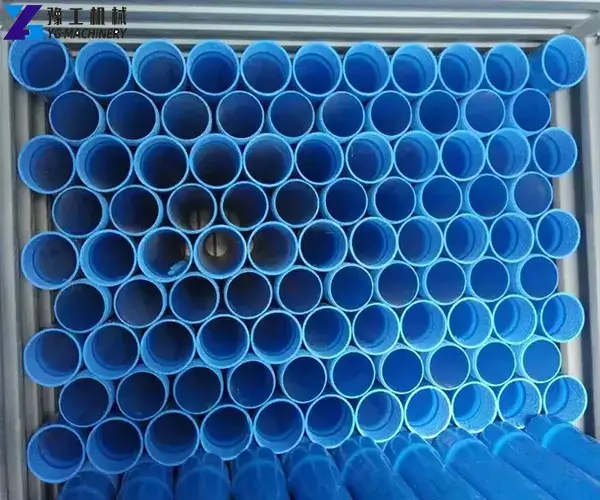
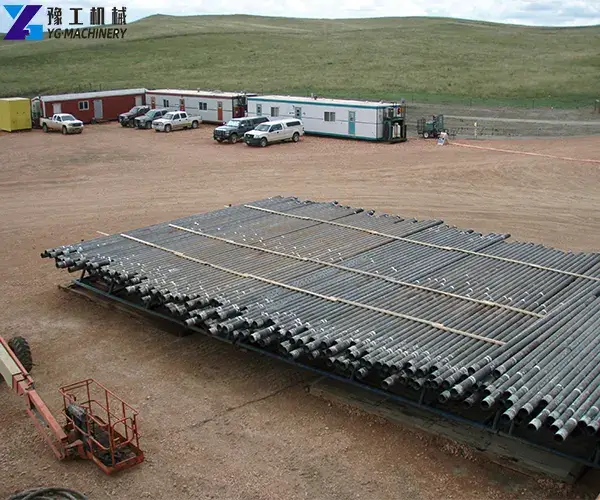
Steel Casing VS. PVC Casing: How to Choose?
| Comparison Criteria | Steel Casing | PVC Casing |
| Maximum Operating Depth | 200m+ (deep wells can reach several kilometers) | ≤90m (heavy-wall versions up to 200m) |
| Compressive Strength | Very high; suitable for high-pressure formations | Moderate; suitable for low- to medium-pressure formations |
| Corrosion Resistance | Poor (requires coating/cathodic protection) | Excellent (rust-proof; acid and alkali resistant) |
| Service Life | 20–50 years (depending on anti-corrosion measures) | 30–70 years (no corrosion issues) |
| Weight | Heavy (requires specialized handling equipment) | Lightweight (two people can carry a 20ft section) |
| Installation Difficulty | Relatively high (requires cranes/drilling rigs) | Low (manual threaded connections) |
| Price (6″ Casing) | $10–$50/foot | $2–$10/foot |
| Potable Water Safety | Requires internal lining | NSF 61 certified |
| Temperature Limits | Withstands 400°C+ | ≤60°C (softens at high temperatures) |
Selection Guide
Scenarios for choosing steel casing:
- Well depth exceeds 90 meters.
- High formation pressure or high hydrostatic pressure.
- Use in high-temperature environments (e.g., geothermal wells).
- Pile foundation projects or applications requiring high load-bearing capacity.
- Unstable formations requiring high-rigidity support.
Scenarios for choosing PVC casing:
- Residential or agricultural water wells shallower than 90 meters.
- Corrosive groundwater (high salinity or acidity).
- Limited budget/need for cost control.
- Remote areas with logistical or installation constraints.
- Strict requirements for drinking water safety.
YG Machinery supplies both steel and PVC casings, covering a full range of specifications—from surface conductor pipe to production casing—and can provide tailored solutions to meet your project requirements.
Rule of thumb: For depths up to 300 feet (approx. 90 meters) with stable geological conditions, PVC is the preferred choice; for greater depths or complex formations, steel casing is more reliable.
Click Here to Learn More Details About the Drilling Rig
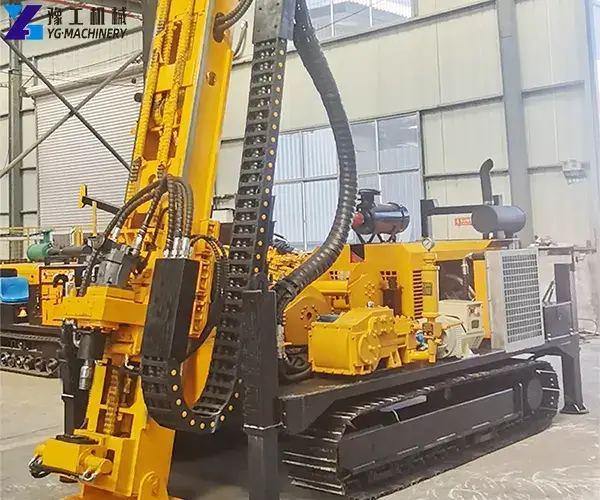
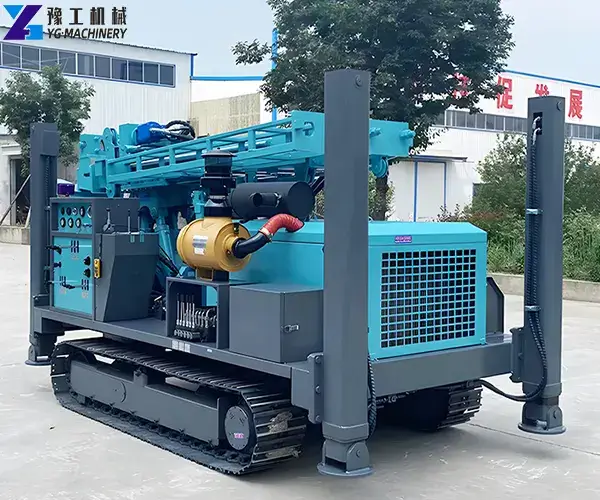
Showcase of Project Cases Where Clients from India and the Philippines Used YG’s Drilling Rigs and Casings
Case Study 1: Agricultural Irrigation Well Project in India
Client Background: An agricultural irrigation service company in Maharashtra, India, required the construction of irrigation wells across multiple farms. The local geological formation consisted primarily of sandy soil and gravel layers, extending to depths of approximately 60–80 meters.
Solution: YG recommended a hybrid casing solution: steel casing for the top 0–10 meters (to protect the wellhead and withstand pressure from the surface gravel layer) and PVC SCH80 casing for the 10–80 meter section (offering corrosion resistance and cost-efficiency while fully meeting strength requirements for this depth). Operations were carried out using a YG truck-mounted water well drilling rig.
Results:
- Construction time per well was reduced to 2 days.
- PVC casing costs were only 40% of an all-steel solution.
- Water quality remained stable over two years of operation, with no signs of casing corrosion.
- Client Feedback: “YG’s hybrid solution saved us money without compromising quality.”
Case Study 2: Mining Exploration Project in the Philippines
Client Background: A mining exploration company on Luzon Island, Philippines, required deep core exploration in mountainous terrain, with well depths exceeding 200 meters. The geological conditions were complex, featuring fractured rock formations and aquifers.
Solution: YG provided a comprehensive steel casing solution (API 5CT N80 grade steel), utilizing YG truck-mounted and crawler-mounted core drilling rigs. Large-diameter steel conductor casing was used for the surface section, while N80 production casing was used for the deeper sections.
Results:
- Successfully penetrated three aquifers and two fractured zones while maintaining borehole stability.
- Casing passed pressure testing on the first attempt, with excellent cement bonding quality.
- Exploration efficiency increased by approximately 35%, reducing rework caused by borehole collapse.
- The client has placed a follow-up order for a second batch of casing.
Click Here to Learn More Details About the Drilling Rig
Frequently Asked Questions About Drill Rig Casings
A1: Not all geological formations require it. However, casing is mandatory for loose or collapse-prone formations, drinking water wells, deep wells, and long-term use wells. For temporary exploration holes in shallow, solid hard rock, casing may be omitted at one’s discretion, though installing at least a surface casing to protect the wellhead is recommended.
A2: Steel casing offers superior strength and longevity, making it suitable for deep holes and complex formations. PVC casing is corrosion-proof and ideal for shallow wells with ambient-temperature water; with proper use, it can last over 20 years.
A3: Yes. YG supplies a full range of casings and accessories; their universal standard connections ensure high compatibility with drilling rigs from other brands.
A4: Yes. Old wells with corroded or damaged casing can be repaired by reaming the hole and installing a smaller-diameter casing inside; the cost is only 40%–50% of drilling a new well.
A5: It is mandatory when passing through loose formations (such as quicksand or gravel), when isolating shallow water sources from contamination, and when dealing with severe fluid loss. For solid rock formations, it depends on the situation, though installing a pump chamber section after well completion is still recommended. Simply put, “assess the geology first, then determine the casing” is the golden rule of the drilling industry.
A6: It depends on the application. Choose steel casing for depths exceeding 90 meters or for high-pressure, high-temperature conditions. Choose PVC casing for depths of 90 meters or less, highly corrosive water, or limited budgets. PVC offers advantages such as corrosion resistance, light weight, and low cost, while steel excels in strength and suitability for deep wells. Many projects use a hybrid approach—steel for the surface section and PVC for the deeper section.
A7: Common errors include: lowering the casing too quickly, causing it to get stuck; failing to grout in a timely manner, leading to casing flotation or misalignment; spacing centralizers too far apart (spacing should be < 12 m); and failing to fully tighten threaded connections, resulting in leaks. The key principles are “slow lowering, frequent grouting, and tight sealing.”
A8: Casing performance gradually declines after years of use. Signs indicating a need for replacement include: a significant drop in water yield that cleaning the screen cannot remedy; the presence of sand or rust in the water; visible cracks or deformation at the casing opening; and signs of wellbore collapse. Inspection methods include downhole camera surveys, ultrasonic measurement of casing wall thickness, and water quality testing. Generally, steel casing has a lifespan of about 10–25 years in corrosive environments, while PVC casing can last over 50 years.