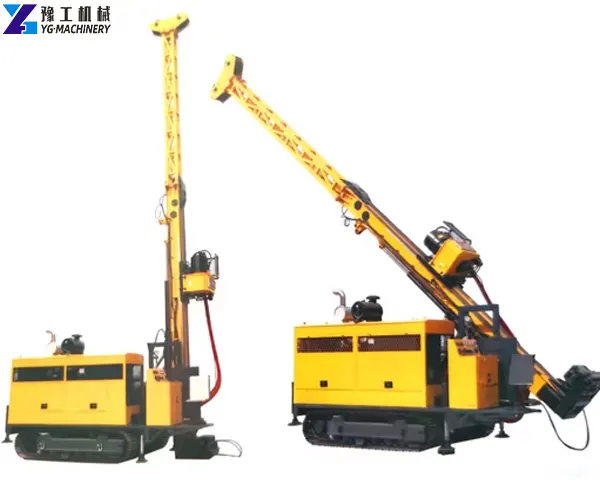
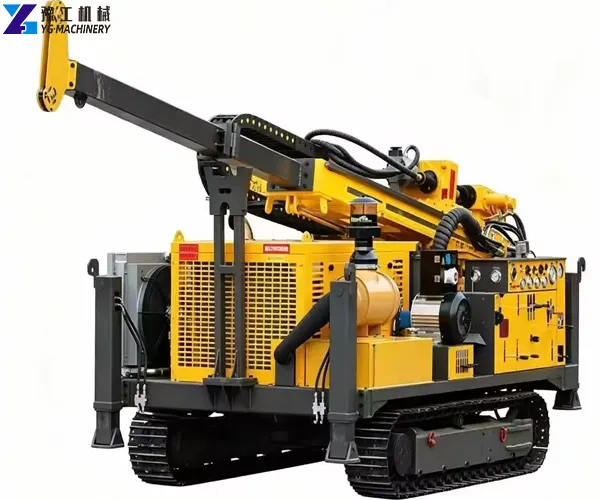
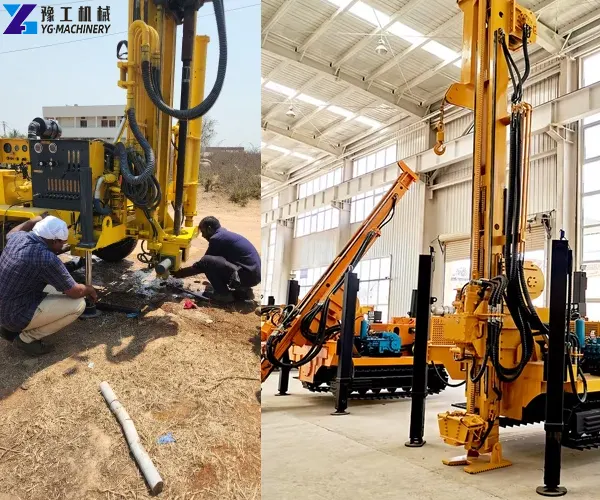
The NQ fully hydraulic core drilling rig is a mainstream specification of a wireline core drilling rig, also known as an NQ wireline core drilling rig or a fully hydraulic geological exploration drilling rig. Its core function is to drill complete cylindrical rock cores from rock formations, providing physical samples for geological research and mineral reserve estimation. Unlike ordinary drilling rigs, it uses wireline core drilling technology, eliminating the need for frequent drill rod retrieval during deep-hole operations, significantly improving efficiency.
YG, as a professional drilling equipment manufacturer, specializes in the full hydraulic core drilling rig series, covering the three mainstream core drilling specifications: BQ, NQ, and PQ. The NQ model is the most widely promoted general-purpose model, balancing drilling depth and core diameter, suitable for most exploration projects. Currently, it has been exported in batches to mineral-rich countries such as Peru, Chile, Ghana, Australia, Indonesia, and Kazakhstan, and is widely applicable to various scenarios including metal ore exploration, engineering geological surveys, and hydrological drilling.
Currently, the industry commonly uses three types of coring specifications, each suitable for different exploration stages, and can be quickly switched by changing drill bits:
- BQ Grade: Small diameter specification, fast drilling speed, low cost, suitable for large-area mineral prospecting and preliminary exploration stages.
- NQ Grade: General-purpose main specification, balancing drilling depth and core diameter, suitable for detailed survey and exploration stages, and is the most widely used standard model in the industry.
- PQ Grade: Large diameter specification, large core diameter, more accurate sample testing data, suitable for detailed surveys of large mineral deposits and key exploration projects.
If you are also interested, please contact us now for more product information.
Click to Learn More About Fully Hydraulic Core Drilling Rigs
YG Hot-sale Full Hydraulic Exploration Core Drilling Rig Technical Parameters
| Model | YGX-400 | YGX-600 | YGX-800 | YGX-1000 |
| Drilling Depth(M) | 180-400-500 | 200-600-650 | 400-800-1000 | 500-1000-1100 |
| Rated pressure(MPA) | 21 | 21 | 25 | 28 |
| Rated Flow(L/min) | 168 | 192 | 260 | 300 |
| Heat Dissipation Mode | Air cooling+water cooling | |||
| Engine Brand | Yuchai | Yuchai | Yuchai | Cummins |
| Rated power/speed | 78kW/ 2400r/min | 92kW/ 2400r/min | 92kW/ 2400r/min | 154kW/2400r/min |
| Drilling Angle(°) | 0-90 | 45-90 | 45-90 | 45-90 |
| Lifting Force(T) | 12 | 16 | 24 | 30 |
| Feed Force(T) | 6 | 8 | 12 | 15 |
| Hydraulic Mud pump flow | 30-90(L/min) | 30-90(L/min) | 90-180(L/min) | 90-180(L/min) |
| Hydraulic Mud pump power | 4-7(MPA) | 4-7(MPA) | 4-7(MPA) | 4-7(MPA) |
| Dimension | 4000*1900*1800mm | 4000*2000*1800mm | 5500*2100*2000mm | 6000*2200*2400mm |
| Weight | 4.3T | 4.5/5.5T | 6.5T | 7.5T |
Click to Learn More About Fully Hydraulic Core Drilling Rigs
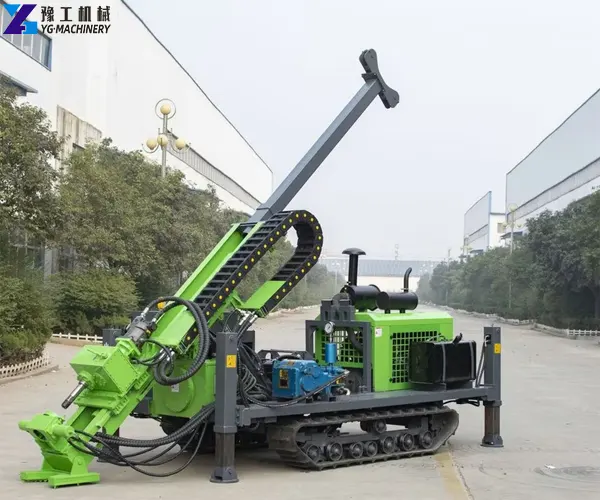
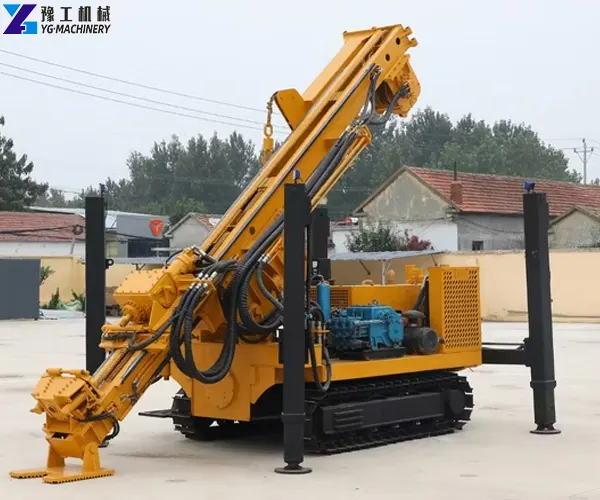
What Is the Working Principle of the NQ Fully Hydraulic Core Drilling Rig?
Step 1: Rotary Cutting and Rock Breaking
The engine drives the hydraulic pump to generate high-pressure oil. This hydraulic oil drives the power head motor to rotate. The power head connects to the drill rod and the NQ diamond drill bit via a connector. The synthetic diamond particles embedded in the drill bit matrix rotate at high speed under a certain drilling pressure, grinding and cutting the rock at the bottom of the hole, forming a 75.7mm diameter circular hole, leaving a 47.6mm diameter cylindrical core in the center.
Drilling pressure and rotation speed are precisely controlled by the hydraulic system: in hard rock formations, increased drilling pressure and decreased rotation speed prevent diamond chipping; in soft rock formations, decreased drilling pressure and increased rotation speed accelerate the drilling speed. The load-sensitive system automatically senses load changes and adjusts in real time, eliminating the need for frequent manual operation.
Step 2: Mud Circulation for Hole Wall Protection and Cooling
During drilling, the mud pump delivers flushing fluid (water or mud) through the drill pipe’s inner cavity to the bottom of the hole, where it is sprayed out from the drill bit’s water inlet. This serves three purposes:
- Cooling the drill bit: It removes heat generated during diamond grinding, preventing overheating and annealing of the drill bit.
- Carrying rock powder: The flushing fluid rises along the annular gap between the drill pipe and the hole wall, carrying the cut rock powder to the surface.
- Protecting the hole wall: The mud forms a mud cake on the hole wall, preventing the collapse of loose strata and maintaining borehole stability.
Step 3: Wireline Core Sampling (Key Point)
After drilling one cycle (usually 1.5-3 meters) and the inner tube is filled with rock cores, core sampling is required. The operating procedure of the NQ wireline coring system is as follows:
- Stop drilling and raise the drill rod 10- 20 cm to detach the drill bit from the bottom of the hole.
- Open the opening at the top of the power head and lower the wireline with the overshot device via the winch.
- The overshot device descends along the inner cavity of the drill rod to the bottom of the hole and automatically hooks onto the spearhead at the top of the inner tube.
- The winch retracts the rope, pulling the inner tube and the core along with it out of the drill rod, leaving the outer tube and drill rod in the hole.
- Retrieve the core, record and photograph it, and put the empty inner tube back into the hole to continue the next drilling cycle.
The entire coring process does not require pulling up or down the drill rod, saving considerable time in deep hole operations. For example, in a 500-meter deep hole, traditional coring methods require 2-3 hours for each trip up and down the drill, while wireline coring only takes 15-20 minutes.
Click to Learn More About Fully Hydraulic Core Drilling Rigs
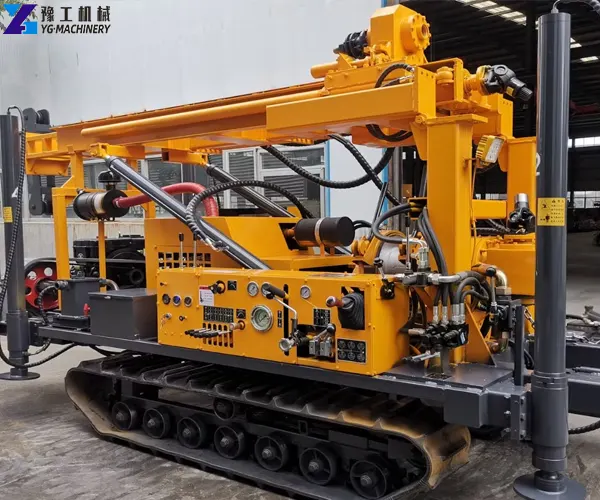
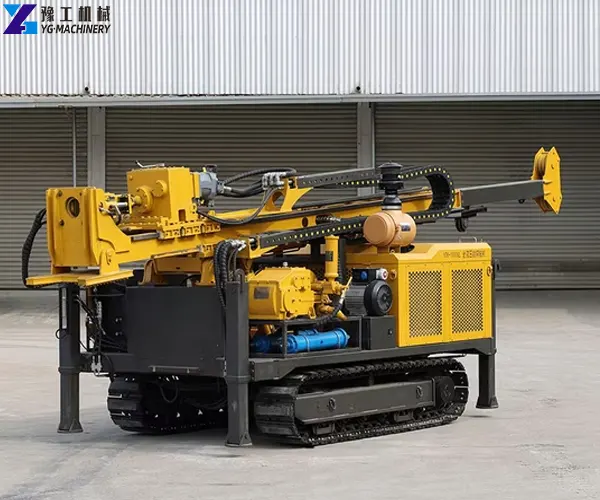
Philippine and Nigerian Customers Purchased YG’s Fully Hydraulic Core Drilling Rigs to Complete Projects
Case Study 1: Nickel Exploration Project in Luzon, Philippines
Client Background: A mining exploration company in Luzon, Philippines, was responsible for the general survey and detailed exploration of a nickel ore project. The mining area is located in a mountainous region with undulating terrain, inconvenient transportation, and strata dominated by basalt and serpentinite, which are relatively hard.
Challenges:
- The mountainous terrain made equipment relocation difficult.
- Drilling efficiency in hard rock formations was low, with traditional equipment achieving less than 10 meters of drilling per day.
- High humidity and a rainy environment led to a high equipment failure rate.
- The project had a tight schedule, requiring the rapid completion of 30 drilling holes.
Solution:
The client purchased two YGX-600 drilling rigs. NQ Fully Hydraulic Core Drilling Rig, Configuration as follows:
- Yuchai 92kW turbocharged engine, adapted to tropical climates.
- Independent temperature control and cooling system + moisture-proof sealing device.
- Complete set of NQ diamond wireline coring tools.
- 500-meter NQ drill rod + 20 alloy drill bits.
Usage Results:
- Average daily drilling efficiency reaches 25-30 meters, 150% higher than the original equipment.
- Core recovery rate is consistently above 96%, providing complete and reliable nickel ore layer data.
- Two rigs working alternately completed all 30 boreholes in just 45 days.
- Crawler remote-controlled movement easily handles mountainous terrain relocation, with a single borehole relocation time of no more than 1 hour.
Customer Testimonial: “This NQ core drilling rig is powerful and efficient. It produces intact core samples, is easy to move, and operates stably even in complex mountainous areas. Compared to our old equipment, it shortens project time and significantly reduces costs.” — Project Manager, Luzon Island, Philippines
Case Study 2: Nigeria Iron Ore Resource Assessment Project
Client Background: A Nigerian iron ore development company holds exploration rights for an iron ore deposit in a state in the midwestern part of Nigeria. The ore bodies are unevenly distributed, requiring extensive drilling to precisely delineate their shape and grade distribution. Local power supply is unreliable, and the supply of spare parts is difficult.
Challenges:
- Uneven ore body distribution, requiring high accuracy in exploration data.
- High temperature and dust levels in the area, demanding high heat dissipation from the equipment.
- Limited operational skills of technical personnel, requiring easy-to-use equipment.
- Long spare parts logistics cycle, requiring high equipment reliability.
Solution:
The customer purchased one YGX-800 fully hydraulic core drilling rig, NQ/HQ dual-specification configuration:
- Yuchai six-cylinder 92kW engine with built-in fuel pre-filtration system.
- Larger air filter + dual oil filter, adaptable to dusty environments.
- NQ/HQ interchangeable drilling tools, allowing flexible selection based on formation.
- Sufficient wear parts and common spare parts kit included.
- Complete English training manual and video tutorials provided.
Usage Results:
- After 8 months of use, a total drilling depth of over 12,000 meters has been achieved.
- The average mean time between failures (MTBF) exceeds 1,600 hours.
- Local operators can operate the rig independently after one week of training.
- The NQ specification is used for general exploration sections, and the HQ specification is used for detailed ore body exploration sections, making it a dual-purpose machine.
Customer Feedback: “The machine is not only highly efficient but…” It’s also easy to operate and maintain. It’s key to our productivity. We’re already planning our second purchase for the next exploration phase. — Director of Operations, Nigerian Iron Mine Project
Click to Learn More About Fully Hydraulic Core Drilling Rigs
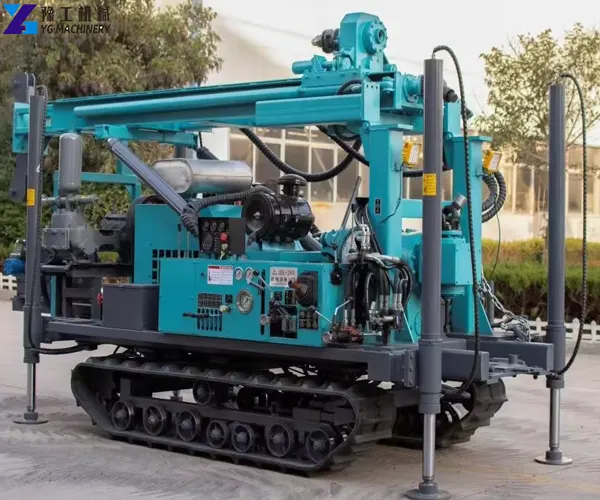
Common Faults and Troubleshooting Methods for NQ Rope Coring Systems
| Common Problems | Possible causes | Solutions |
| The retrieval device cannot reach the inner tube | Insufficient wire rope length; inner tube detached and tilted | Check wire rope markings; lower slowly while gently rotating the winch. |
| After retrieval, it cannot be lifted | Core material stuck in the inner tube; inner and outer tubes locked together | Lower the rope first, then slowly raise it, repeating the process; never pull suddenly. |
| Low core recovery rate | Worn retaining ring; incorrect drill bit selection; excessive drilling pressure | Replace the retaining ring; select the drill bit appropriate for the formation; adjust drilling pressure parameters. |
| The inner tube does not descend to the correct position | Foreign object inside the drill rod; damaged inner tube seal | Flush the drill pipe; replace the sealing ring. |
| Severe core fragmentation | Excessive rotation speed; fractured formation; flushing fluid erosion | Reduce the rotation speed; use a double-layer core tube; adjust the pump flow rate. |
How to Choose the Right Diamond Drill Bit for an NQ Drilling Rig? Different Formations Require Different Matrix Types
| Stratigraphic Types | Representative Rocks | Recommended drill bit matrix hardness | Recommended diamond grit sizes | Reference lifespan |
| Soft Rock | Clay, Shale, Marl | Soft matrix (low hardness) | Coarse (30-40 mesh) | 200-300 meters |
| Medium-Hard Rock | Sandstone, Limestone, Marble | Medium-soft matrix | Medium (40-60 mesh) | 150-200 meters |
| Hard Rock | Granite, Basalt, Gneiss | Medium-hard matrix | Medium-fine (50-80 mesh) | 80-150 meters |
| Extremely Hard Rock | Quartzite, Chrysalis, Amphibolite | Hard matrix | Fine (70-120 mesh) | 50-80 meters |
| Fractured Stratigraphy | Fault Zones, Weathered Layers | Medium matrix + gauge protection | Mixed grit | 40-80 meters |